We want to create the biggest online listing collection of riades around the world!
Please add you short stay riad rentals now.
Staying in a riad makes you feel lika a true moroccan VIP. However, finding a great riad can be hard as we found out from our own experience. That's why we collect the most stunning Riads, so that you can book one in a matter of minutes !
List your riad on this page?
Add linkStaying in a riad: a practical guide to Morocco's courtyard houses
From the street, a riad gives almost nothing away. You walk down a narrow lane of plain earth-coloured walls, stop at a heavy wooden door, and step inside. Suddenly the noise of the medina drops away, and you are standing in a quiet courtyard open to the sky, with tiled floors, a fountain or a small pool, orange trees and rooms looking inward rather than out. That moment of surprise is the heart of the riad experience.
The word riad comes from the Arabic for garden, and strictly speaking it describes a house built around a courtyard garden. A house with a courtyard but no garden is often called a dar, although today many guesthouses use the word riad for both. Many of these family homes in the old cities of Morocco have been restored and turned into small guesthouses with a handful of rooms, a roof terrace and a host who knows the neighbourhood well.
Part of a worldwide family of courtyard homes
The riad is Moroccan, but the idea behind it is shared by many cultures. Around the Mediterranean and beyond, people in hot, crowded cities built homes that turn their backs to the street and open onto a private inner space.
- Andalusia has its flower-filled patios, and Granada has the carmen, a walled house with a terraced garden on the hillside of the Albaicín, facing the Alhambra.
- Damascus is known for its old courtyard houses, with fountains, citrus trees and richly decorated reception rooms.
- Beijing has the siheyuan, a house of four wings arranged around a central courtyard, traditionally found along the hutong lanes.
- India has the haveli, a townhouse or mansion built around one or more courtyards, especially in Rajasthan and Old Delhi.
Seen in this light, a night in a riad is a chance to experience one of the oldest ideas in city living: shade, privacy and calm in the middle of a busy town.
Where you will find riads
Most riads are inside the walled medinas, the historic old towns. Marrakech has the largest choice, with lively lanes around Jemaa el-Fnaa square and quieter corners further out. Fez, with its vast medina of Fes el Bali, feels even more like stepping back in time. Essaouira on the Atlantic coast is breezy and relaxed, Chefchaouen in the Rif mountains is famous for its blue-washed walls, and Rabat, Tangier and Meknes each have their own atmosphere and fewer crowds. In the south, around Ouarzazate, the palm groves and the desert edge, you will also find kasbahs and earthen guesthouses built in the same inward-looking spirit.
Arriving: getting through the maze
The first thing to know is that cars cannot drive into most of the medina. Lanes are too narrow, and many are stepped or covered. Your taxi or transfer will stop at a gate, a square or a car park, and the rest is on foot. This is normal, and a good host will plan it with you.
- Ask your riad for an exact meeting point. Many will send someone to meet you and walk you to the door, especially on your first arrival or after dark.
- In Marrakech and Fez, porters with hand carts wait near the gates to carry luggage through the lanes. A small tip is expected, so keep some change ready.
- Map apps can be unreliable in the medina, and doors often have no sign. Save the riad's phone number and take a photo of the door and the nearest landmark when you leave for the first time.
- People may offer to show you the way. A polite but firm "no thank you" is fine if you do not want help; if you accept, expect to give a tip.
- Pack light, or at least in bags you can carry up stairs. Wheeled suitcases struggle on cobbles and steps.
Life around the courtyard
Inside, everything turns around the central courtyard. Rooms open directly onto it or onto galleries above, which is beautiful, but it also means sound carries. Voices, footsteps and the early breakfast preparations can travel from one side of the house to the other. Light sleepers may want to bring earplugs, and all guests do well to keep voices low late at night.
Look closely at the craftsmanship. Zellige, the mosaic of small hand-cut glazed tiles, covers floors, fountains and walls. Above it you will often see carved plaster in delicate geometric and floral patterns, painted cedar wood ceilings and doors, and walls finished in smooth, polished tadelakt. Some riads have a small plunge pool in the courtyard, welcome on a hot afternoon, though it is usually for cooling off rather than swimming lengths.
Riads are built upward, not outward, so expect stairs, often steep and narrow, and rarely a lift. If anyone in your group finds stairs difficult, ask for a room on the ground floor.
The roof terrace and meals
The roof terrace is where many guests spend their best hours. It is the place for breakfast in the sun, a glass of mint tea at sunset while the call to prayer drifts across the rooftops, and a view over minarets, satellite dishes and, on clear days in Marrakech, the snowy peaks of the Atlas. Breakfast is usually included and often generous, with breads, pancakes, eggs, fruit, jams and honey. Many riads also cook dinner on request, a chance to try a slow-cooked tagine or couscous at home rather than in a restaurant.
Hammams, weather and the seasons
A visit to a hammam, the steam bath, is a Moroccan tradition. Some riads have their own small hammam or can arrange a visit to a public or spa hammam nearby, with a scrub using black soap.
Plan for the climate. Winter nights can be surprisingly cold, especially in Fez, Marrakech and the mountains, and old houses with open courtyards are not built to hold heat. Ask how rooms are heated and bring warm layers. In summer, inland cities can be very hot in the middle of the day, and air conditioning, shady rooms and a plunge pool make a big difference. Spring and autumn are pleasant in most places, and the coast around Essaouira stays milder all year.
Customs, dress and the souks
During Ramadan, many Moroccans fast from dawn to sunset. Riads keep serving guests, but some cafes close during the day, and the evenings become lively once the fast is broken. It is respectful not to eat, drink or smoke openly in the street during the day. Dress modestly in the medina, with shoulders and knees covered, which is also practical against the sun. Most mosques in Morocco are closed to non-Muslims, and it is polite to ask before photographing people.
In the souks, bargaining is expected. Stay friendly, have a price in mind, and feel free to walk away. Your host can often tell you what is fair.
Questions to ask before you book
- Where exactly is the nearest point a taxi can reach, and can someone meet us there?
- How many rooms are there, and do they open onto the courtyard?
- How many stairs are there to our room, and is a ground-floor room available?
- How are the rooms heated in winter and cooled in summer?
- Is breakfast included, and can you prepare dinner?
- Is there a roof terrace, a plunge pool or a hammam?
- Can you arrange airport or station transfers?
- Which payment methods do you accept, and is cash needed on arrival?
Choose your riad from the listings
The riads on this page are grouped by continent, country and region, so you can go straight to Marrakech, Fez, the coast or the south. Every link takes you to the owner's own website, where you can look at the rooms, check availability and book directly. Do you run a riad, dar or kasbah that welcomes guests? Add your link for free with the button above and let travellers find their way through the medina to your door.
Looking for an awesome place to spend your holiday?
Or want to advertise your houseboat, lighthouse, treehouse or glamping?
Check these links below!
Blog posts
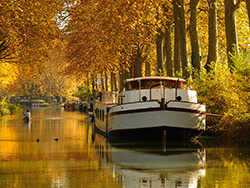
Barge river cruises in France
River cruises in France are the next luxury holiday destination. Cruise your private barge with cook down the French rivers.
Read more..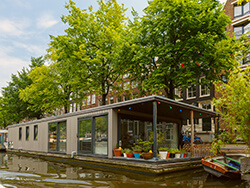
Rent a houseboat in Amsterdam
A houseboat is a great place to stay when visiting Amsterdam. Stay close to the city center but have a lot of private space.
Read more..